

Midnight Reggae Vibes — Unsung Hero
Presented by Fela TuffSoul, C.E.O. of TuffBuzz Entertainment
There are people who make music.
There are people who perform music.
There are people who produce music.
And then there are the people who build the roads that allow music to travel.
Patricia Dorothy Chin — affectionately known around the world as “Miss Pat” — belongs to that last category.
For more than six decades, Miss Pat has stood at one of the most important intersections in Jamaican music: where culture meets commerce, where artists meet opportunity, and where Jamaican creativity meets the rest of the world.
Her story is not simply the story of a record company.
It is the story of Randy’s Record Mart, Studio 17, Vincent “Randy” Chin, VP Records, generations of Jamaican artists, and an unwavering belief that Caribbean music deserved a place on the global stage.
Born in Kingston, Jamaica, on September 20, 1937, to Chinese and Indian-Jamaican parents, Patricia Chin entered a music business that was still in its formative years. Decades before reggae became an international cultural force, she and her husband, Vincent “Randy” Chin, were already building the foundation.
And they started remarkably small.
FROM 45s TO A MUSICAL REVOLUTION

What might have looked like a modest record shop from the outside became something much bigger.
It became a meeting place.
A marketplace.
A cultural laboratory.
And eventually, a gateway into the emerging Jamaican recording industry.
As Jamaica moved through ska, rocksteady and into reggae, Randy’s was there.
Miss Pat was behind the counter, listening, learning, selling records and developing an extraordinary understanding of the music and the people creating it.
VP Records traces the beginning of the Chins' journey to 1958, when they started selling used jukebox 45s. By the early 1960s, Randy’s had moved to 17 North Parade, where the family developed the operation into much more than a record store.
Then came Studio 17.
And that changed everything.
STUDIO 17: WHERE HISTORY WAS RECORDED
Above Randy’s Record Mart was a recording studio that would become one of the important homes of Jamaica's emerging music.
Studio 17 became a gathering point for musicians, producers, singers and aspiring artists.
According to VP Records, the studio recorded thousands of artists from the late 1960s into the 1970s, including Bob Marley & The Wailers, Peter Tosh, The Heptones, Dennis Brown and Gregory Isaacs, among many others.
The significance of Studio 17 goes beyond the famous names.
It was also part of a culture in which artists who did not have enormous financial resources could find a place to record, press and sell their music.
That spirit of accessibility became one of the defining characteristics of Miss Pat's career.
She understood something fundamental:
Talent needs opportunity.
And sometimes the difference between an unknown artist and a successful artist is simply having somebody willing to open the door.
Studio 17 was one of those doors.
The studio was also connected to some of the earliest recordings associated with Bob Marley and The Wailers. VP Records notes that Lee “Scratch” Perry used Studio 17 for sessions that included material from Soul Rebels and Soul Revolution, along with other early Wailers recordings.
The small Kingston operation was quietly becoming part of reggae history.
WHEN JAMAICA'S MUSIC LEFT JAMAICA
The 1970s brought tremendous social and political challenges to Jamaica.
The Chins eventually looked beyond Kingston.
They saw an opportunity in New York City, particularly in Queens, where a growing Caribbean community was hungry for music from home.
The move was not simply a relocation.
It was a strategic expansion.
Jamaica was creating the music. New York could help create the international marketplace.
In the late 1970s, Vincent and Patricia Chin established the company that became VP Records, taking the initials of Vincent and Patricia and transforming them into one of the most recognizable names in reggae. VP Records identifies 1979 as the founding year.
From a modest operation in Queens, VP began building distribution networks for Jamaican and Caribbean music.
And gradually, the music that had been created in Kingston began reaching audiences far beyond Jamaica.
VP RECORDS: BUILDING THE BRIDGE
Today, VP Records describes itself as the world's largest independent reggae label, with a global operation spanning multiple markets. Its history includes retail, distribution, recording, publishing, synchronization, merchandise, events and artist development.
But the most important part of the story is what VP represented.
It became a bridge.
Kingston → Queens → The Caribbean → The World.
That bridge helped generations of Jamaican artists reach audiences who might otherwise never have encountered their music.
VP's catalogue and artist relationships have encompassed generations of reggae, dancehall and soca talent, while its distribution infrastructure helped Jamaican music remain commercially accessible internationally. The company also established VP Associated Label Group (VPAL) to help independent producers and artists bring their music to market.
Artists associated with the company's history include names such as Yellowman, Barrington Levy, Lady Saw, Maxi Priest, Beenie Man, Bounty Killer, Sean Paul, Beres Hammond, Spice and many others.
That list tells only part of the story.
Because Miss Pat's contribution was not merely about the biggest stars.
It was about the ecosystem.
The distributors.
The record stores.
The producers.
The independent artists.
The collectors.
The sound-system culture.
The people behind the scenes.
The people whose names may never have appeared in newspaper headlines but whose work helped Jamaican music survive and expand.
A WOMAN IN A MAN'S WORLD
Miss Pat's achievement becomes even more significant when viewed through the realities of the music business in which she built her career.
She entered an industry that was overwhelmingly male-dominated.
Yet she became the matriarch of one of the most influential independent music companies connected to reggae.
VP Records has described her as a pioneer who moved from working behind a record-store counter to helping build a global label and distribution company.
Her influence was not built overnight.
It was built one record at a time.
One artist at a time.
One relationship at a time.
One decision at a time.
And perhaps most importantly, one generation at a time.
In 2015, Miss Pat became the first woman to receive the American Association of Independent Music's Lifetime Achievement Award, another recognition of her extraordinary contribution to independent music.
MORE THAN A BUSINESSWOMAN — A KEEPER OF CULTURE
There is another dimension to Miss Pat's story that deserves attention.
She did not simply participate in the reggae business.
She became one of its historians.
Her memory contains stories from an era when many of today's legends were simply young musicians trying to get their records heard.
Her book, Miss Pat: My Reggae Music Journey, combines memoir and photography to document her extraordinary path through six decades of Jamaican music history. The project chronicles Randy's Record Mart, Studio 17, VP Records and the people who passed through those spaces.
And that historical responsibility matters.
Because music can disappear.
Records become rare.
Studios disappear.
Businesses close.
People pass away.
But stories preserve what physical places cannot.
Miss Pat has helped keep those stories alive.
THE POWER OF GIVING BACK
Miss Pat's legacy also extends beyond the record business.
The V & P Family Foundation, established by Patricia Chin, supports music education, assists young musicians, promotes the history and preservation of reggae and Caribbean music, and provides assistance to musicians in need.
That mission is particularly significant because it completes the circle.
The woman who once helped artists get their records into people's hands now helps create opportunities for another generation.
She understands where she came from.
And she understands what it means when somebody believes in an artist before the rest of the world does.
RECOGNITION FROM JAMAICA
After decades of international influence, Miss Pat's contribution has continued to receive recognition in Jamaica.
On August 6, 2024, Jamaica's Independence Day celebrations included the presentation of a Reggae Icon Award to Patricia “Miss Pat” Chin for her contribution to Jamaican music and culture.
The recognition placed her alongside major figures from reggae and dancehall and reflected something that had already been understood by generations of people within the music business:
Miss Pat is part of reggae history.
Not simply as an observer.
Not simply as a business executive.
But as one of the people who helped construct the infrastructure through which reggae became international.
THE REAL LEGACY OF MISS PAT
When people talk about reggae's global success, conversations often focus on the singers.
Bob Marley.
Peter Tosh.
Burning Spear.
Dennis Brown.
Gregory Isaacs.
Yellowman.
Beres Hammond.
Beenie Man.
Bounty Killer.
Sean Paul.
And countless others.
But behind every successful musical movement there are also people building the machinery that allows that movement to survive.
People pressing records.
People selling records.
People distributing records.
People financing projects.
People opening studios.
People connecting artists with producers.
People preserving catalogues.
People taking risks.
People believing in music before the rest of the world understands its value.
Miss Pat was one of those people.
Her story demonstrates that a music industry is not built only on microphones and stages.
It is built on infrastructure, relationships, vision, perseverance and culture.
FROM 17 NORTH PARADE TO THE WORLD
There is something poetic about the journey.
It began at 17 North Parade in Kingston.
A small record operation.
A few records.
A developing Jamaican music scene.
A husband and wife willing to take a chance.
Then came Studio 17.
Then came New York.
Then VP Records.
Then an international catalogue.
Then generations of artists.
And eventually, a global reggae institution.
The physical distance between Kingston and Queens is thousands of miles.
But Miss Pat helped turn that distance into a connection.
The music traveled.
And because the music traveled, Jamaican culture traveled with it.
That may ultimately be Miss Pat's greatest achievement.
MISS PAT: A LEGACY THAT REFUSES TO FADE
Patricia “Miss Pat” Chin's story is not simply about VP Records.
It is about belief.
Belief in Jamaican music.
Belief in independent artists.
Belief in Caribbean culture.
Belief in the power of records to connect people.
And belief that music created in a small island nation could speak to the entire world.
For more than sixty years, she has witnessed Jamaican music transform from a developing local industry into a global cultural force.
She has seen genres emerge.
She has watched artists become legends.
She has watched technology change the way music is recorded, distributed and consumed.
And through it all, she remained connected to the music.
That is why the name Miss Pat carries such weight.
She represents a generation of music pioneers who did not have streaming platforms, social media or instant global distribution.
They had records, sound systems, studios, storefronts, relationships and determination.
And they built something.
Something that survived.
Something that expanded.
Something that reached the world.
Patricia “Miss Pat” Chin is not merely a chapter in the history of reggae.
She is part of the foundation upon which that history was built.
THE LEGACY • THE STORY • THE CONTRIBUTION
This is why we remember Miss Pat.
This is why we honour Miss Pat.
And this is why her story must continue to be told.
WATCH FULL VIDEO BELOW:
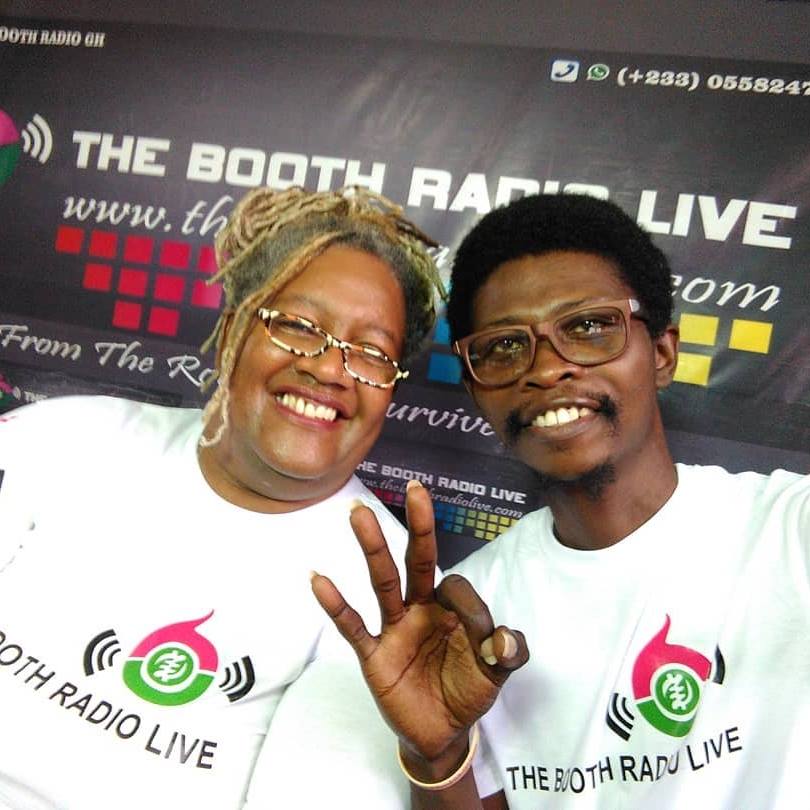
The Booth Radio Live — Unsung Hero
“AH WE DIG DEM OUT.”
Presented by Fela TuffSoul, CEO of TUFFBUZZ Entertainment, the Unsung Hero segment celebrates the people whose contributions helped build, preserve and advance reggae, dancehall and Caribbean music.
Patricia “Miss Pat” Chin — thank you for helping the music travel.


0 Comments