

“The next man winning doesn’t stop your bread. The next man winning makes your bread.”
There are interviews that entertain, interviews that inform, and then there are conversations that force an industry to look at itself in the mirror.
The recent Midnight Reggae Vibes conversation with Kay Tha GoldCoastBoy, CEO of Yardie Sessions, was firmly in the third category.
Hosted by TrapGAD and continued by Fela TuffSoul, the interview went beyond the usual questions about music, events and entertainment. It became an in-depth examination of Ghana's Reggae and Dancehall ecosystem—its talent, its challenges, its opportunities, its international ambitions and, most importantly, the collective responsibility required to make the culture commercially sustainable.
Yardie Sessions' own EPK describes the organization as a platform dedicated to discovering, developing, documenting and promoting Reggae and Dancehall talent across Ghana and Africa. Founded in 2017 under Affari Connect LLC, it positions itself as a cultural movement committed to preserving Caribbean-inspired music and culture while creating global opportunities for African artists.
Kay's conversation showed why that mission is much bigger than a slogan.
FROM BIGGBONE TO THE YARDIE MOVEMENT
One of the most revealing moments came when Kay traced the origins of Yardie Sessions beyond its official 2017 establishment.
According to Kay, his involvement in the music business began around 2011–2012, when he started working with Ghanaian artist Biggbone.
The initial idea was surprisingly simple.
Kay recognized Biggbone's strength as a freestyle artist and created a recurring freestyle format around that ability. What began as a promotional concept for one artist gradually revealed something much bigger: the same platform could become a vehicle for many artists.
That realization became the foundation for what Yardie Sessions would eventually become.
The idea was not simply to put artists in front of a camera. It was to create a space where talent could demonstrate itself.
And that philosophy remains central to Yardie's identity.
Watch: Biggbone's first Yardie Session fresstyle
“YARDIE IS MORE THAN A PLATFORM. IT'S A CULTURE.”
Perhaps the defining statement of the interview came when Kay explained why he refuses to see Yardie Sessions merely as a media platform.
For him, the word media is too small.
Yardie Sessions has developed into a network involving artists, selectors, DJs, sound engineers, promoters, media personalities, live performers and other stakeholders within the Reggae and Dancehall space.
Kay pointed to the platform's freestyle sessions, live performances, rhythms, dubplates, recording activities and educational initiatives as evidence of that broader mission.
His philosophy is rooted in the history of Jamaican sound-system culture.
Before an artist became a recording artist, the sound system provided a testing ground. Artists had to perform, compete, entertain and prove themselves before moving further into the recording industry.
Yardie Sessions, in Kay's vision, recreates some of that developmental pathway for contemporary African artists.
The message is powerful:
Don't just record an artist. Develop the artist.
Watch: KIM MAUREEN on Yardie Session
THE PROBLEM IS NOT TALENT—IT IS THE SYSTEM
When TrapGAD asked what is missing from Ghana's Reggae and Dancehall ecosystem, Kay did not hesitate.
His answer was funding.
But he immediately expanded the argument.
The problem, he explained, is not only a shortage of money. It is the absence of a properly connected ecosystem in which artists, DJs, radio personalities, bloggers, promoters, event planners, engineers and other stakeholders understand that one person's success can generate opportunities for everyone else.
Kay repeatedly returned to one central idea:
The industry must stop thinking individually and start thinking collectively.
An artist gaining visibility can generate work for a radio station.
A radio station helping an artist can contribute to that artist's growth.
A successful artist can attract audiences to events.
Successful events create opportunities for promoters, DJs, vendors, media companies and sponsors.
And when the entire ecosystem grows, everyone has a larger market to operate within.
Kay described the belief that another artist's success reduces one's own opportunities as a fallacy.
Instead, he argued that more successful artists mean more attention, more audiences, more events, more promotion and ultimately more money flowing through the industry.
That may be one of the most important economic arguments to emerge from the interview.
WATCH: Yardie Dancehall Cypher Ft. JAH LEAD • KAHPUN • J.DEROBIE • GENNA
“THE NEXT MAN WINNING DOESN'T STOP YOUR BREAD”
Kay's philosophy can be reduced to one of the strongest ideas from the conversation:
“The next man winning doesn't stop your bread. The next man winning makes your bread.”
It is a philosophy that challenges one of the most persistent problems in creative industries: competition without collaboration.
Kay argued that stakeholders sometimes become protective of their positions, believing that promoting another artist could reduce their own relevance.
He sees the opposite.
If more artists become successful, more people become interested in the genre.
More interest creates more demand.
More demand creates more opportunities.
And more opportunities strengthen the entire ecosystem.
He used Yardie Sessions itself as an example, emphasizing that the platform cannot exist without the artists, DJs, engineers, promoters and media personalities who contribute to it.
In Kay's philosophy, Yardie is not one man. Yardie is everybody.
WATCH: YARDIE DANCEHALL CYPHER Ft GUNNYBOY • RAPHA & JEFRI KING
CORPORATE GHANA: “THE CURRENCY IS NUMBERS”
Another major theme was corporate investment.
Kay challenged the common practice of simply blaming corporate Ghana for failing to invest in entertainment.
His argument was more pragmatic.
Businesses invest because they expect measurable returns.
Therefore, the creative industry must produce the numbers that demonstrate audience demand.
Attendance.
Reach.
Streams.
Engagement.
Visibility.
Audience loyalty.
Commercial impact.
For Kay, these are the numbers that can convince corporate brands that Reggae and Dancehall represent a viable commercial market.
His argument was essentially this:
Don't just ask companies to invest. Build an audience that makes investment make sense.
That is a significant shift in thinking—from entitlement to measurable value.
WATCH: JEFRI KING Wicked Session on Yardie Session
GHANA ALREADY HAS THE TALENT
One of the most memorable metaphors from the interview was Kay's comparison between Ghanaian talent and gold.
Ghana, he argued, does not need to manufacture talent.
The gold is already here.
What is missing is the process of discovering it, developing it and putting it on the right platforms.
He believes Ghana has enormous reserves of Reggae and Dancehall talent, but too many artists remain outside the spotlight because the industry is not doing enough to showcase them.
He also criticized the tendency of established artists and industry stakeholders to feel threatened when new talent emerges.
His solution is simple:
Create room for more people to shine.
WATCH: J.DEROBIE - Yardie Dancehall Freestyle Session
HARD WORK, NOT HYPE
When the conversation moved into A&R and artist development, Kay delivered another important lesson.
What does he look for in an artist?
Talent matters.
But talent alone is not enough.
Kay emphasized hard work, dedication, belief in oneself and investment in one's craft.
His football analogy was particularly effective: just as a footballer's first touch can reveal natural ability, an artist's music can reveal talent—but talent must eventually be supported by discipline and commitment.
He also stressed that every artist is different.
A manager cannot use one formula for everybody.
An artist must be understood as an individual, with particular strengths, weaknesses, personality traits and creative qualities.
That philosophy explains why Kay says artist management can be both difficult and simple:
It becomes easier once you understand the artist.
WATCH: RAPHA - Yardie Session | Freestyle
THE BIGGEST MISTAKE EMERGING ARTISTS MAKE
Kay was particularly critical of artists who enter music because of the lifestyle they see in music videos.
The cars.
The jewelry.
The fame.
The women.
The appearance of an easy life.
According to Kay, young artists sometimes mistake the image surrounding music for the actual work of music.
His message was blunt:
Music is a career.
Just as a banker trains for banking and a teacher prepares for teaching, an artist must study the craft.
And perhaps more importantly, an artist must remain a student.
Kay warned artists against becoming obsessed with producing a hit song simply because they believe a hit will guarantee long-term relevance.
His philosophy is different:
Perfect the craft.
A hit may create attention.
But craftsmanship creates longevity.

“MUSIC IS FOREVER”
Kay's discussion of longevity was one of the most philosophical portions of the interview.
He argued that artists should not judge their careers solely by today's popularity.
Music can outlive its creator.
A song released today may not receive its greatest recognition today. Its importance can emerge years later.
He used Bob Marley as an example of an artist whose music continues to live beyond his lifetime.
The lesson for emerging artists is therefore not to chase every trend.
It is to create work capable of surviving trends.
Kay's advice was direct:
Stay true to yourself. Perfect your craft. Don't chase clout.
WATCH: Genna Deliver Pure Dancehall Vibes
THE BRIDGE BETWEEN GHANA AND JAMAICA
When TuffSoul took over the interview, the conversation moved into one of Yardie Sessions' most ambitious objectives: connecting African and Caribbean Reggae and Dancehall communities.
Kay explained that his early uncertainty about whether Jamaica would embrace Ghanaian Reggae and Dancehall has gradually been replaced by a growing network of relationships.
He discussed connections involving figures and organizations in Jamaica and the wider Caribbean and described music itself as the bridge.
The exchange is not supposed to be one-directional.
Ghanaian artists gain access to Caribbean networks, knowledge and audiences.
Caribbean creatives gain access to African audiences, artists and opportunities.
That makes the relationship potentially beneficial to both sides.
Kay described it as a win-win exchange—not simply cultural borrowing, but collaboration, learning and market expansion.
THE CARIBBEAN VALIDATION
Kay made an interesting strategic argument about international expansion.
His ultimate ambition is not limited to Jamaica.
He wants Ghanaian artists to reach the European and American markets.
But he believes Caribbean recognition can serve as an important form of validation.
The logic is straightforward: if the culture's traditional stronghold recognizes the quality of an artist's work, that recognition can help open doors elsewhere.
For him, Jamaica is therefore not simply another market.
It represents an important cultural gateway.
WHY LIVE MUSIC STILL MATTERS
As an event planner, Kay was asked what separates a great Reggae and Dancehall event from an ordinary one.
His answer was emphatic:
Live music.
He argued that live bands and authentic musical performance are central to the Reggae and Dancehall concert experience.
For Kay, the live experience is not an optional extra.
It is part of what gives Reggae its identity.
WATCH: Kahpun Light Up the Yardie Dancehall Cypher
SOCIAL MEDIA CANNOT REPLACE EVERYTHING
Kay also offered a balanced view of traditional and digital media.
He does not believe artists should choose one and abandon the other.
Social media has transformed discovery.
Today, an emerging artist can record a freestyle on a phone, upload it and potentially reach people who would never have encountered the artist through the old music-industry gatekeeping system.
But traditional media still plays an important role.
Radio, established media platforms and interviews can provide credibility, validation and broader exposure.
His conclusion:
Social media and traditional media should work together.
One does not necessarily replace the other.
WATCH: Donkolo, Yardie Session, Rvssian - Red Notice ( Official Music Video)
WHY DOCUMENTARIES, INTERVIEWS AND LIVE SESSIONS MATTER
Kay also defended the importance of using multiple forms of media.
Live sessions can showcase talent.
Interviews can reveal personality and story.
Documentaries can deepen the audience's understanding of an artist.
Event coverage can capture moments and build historical records.
Digital marketing can amplify the message.
For Kay, none of these tools should be viewed in isolation.
The real power comes from knowing when and how to use each one.
That philosophy is reflected in the Yardie Sessions model, which combines live performance, artist development, media, interviews, event coverage, international partnerships, documentaries, artist promotion and digital marketing.
THE OPPORTUNITY THE INDUSTRY IS OVERLOOKING
When TuffSoul asked Kay about the biggest opportunity currently being overlooked in African Reggae and Dancehall, his answer returned to the same theme that ran through the entire interview:
Talent.
There is talent everywhere.
The challenge is finding it, developing it, giving it platforms and building a system around it.
And that is exactly where Kay believes Yardie Sessions can play a defining role.
The objective is not to create one superstar.
It is to create an environment where many artists can thrive.
Because when more artists thrive, the genre itself becomes stronger.
WATCH: Kahpun x Yardie Session x Djae Banky - No Gimmicks (Nteasea Riddim)
FIVE YEARS FROM NOW
The final question brought the conversation back to the future.
Where does Kay see Yardie Sessions five years from now?
His response was optimistic.
He believes many of the objectives currently being pursued will have been achieved—but he also made it clear that achievement should not be the end of the journey.
The goal should continue expanding.
That is perhaps the most revealing aspect of Kay's philosophy.
Yardie Sessions is not being built simply to become successful.
It is being built to become useful.
Useful to artists.
Useful to the culture.
Useful to the industry.
Useful to young people.
Useful to the international Reggae and Dancehall community.
WATCH FULL INTERVIEW BELOW:
A MESSAGE TO THE NEXT GENERATION
By the end of the interview, one message had become impossible to miss.
Kay Tha GoldCoastBoy is asking artists to stop chasing the appearance of success and start building the substance of a career.
He is asking DJs to understand that promoting artists strengthens the industry they themselves depend on.
He is asking media platforms to understand that discovering and supporting talent is not merely doing artists a favour—it is investing in the ecosystem.
He is asking established artists to stop seeing emerging artists as threats.
And he is asking everyone involved to make sacrifices today so that the industry can become strong enough for everybody to eat tomorrow.
His philosophy can be summarized in three words:
Build the ecosystem.
FROM THE ROOTS, WE SURVIVE
For The Booth Radio Live, the conversation carries an additional significance.
Yardie Sessions is not simply an organization being discussed on Midnight Reggae Vibes.
Yardie Sessions is also a sponsor supporting the Midnight Reggae Vibes Show.
That partnership makes the conversation more than an interview.
It represents two platforms operating from different angles but toward a shared objective: keeping Reggae and Dancehall visible, documented, discussed and moving forward.
The interview was therefore not simply about Kay.
It was about the artists.
The DJs.
The promoters.
The engineers.
The media.
The fans.
The culture.
And the future.
Yardie Sessions' guiding philosophy captures that mission:
“Preserving the Culture. Elevating the Sound. Connecting Africa to the World.”
And after listening to Kay Tha GoldCoastBoy speak, one thing is clear:
The next chapter of African Reggae and Dancehall will not be built by one person.
It will be built by an ecosystem.
It will be built by people willing to push the next person.
And when that next person rises, everybody rises with them.
Midnight Reggae Vibes
The Booth Radio Live
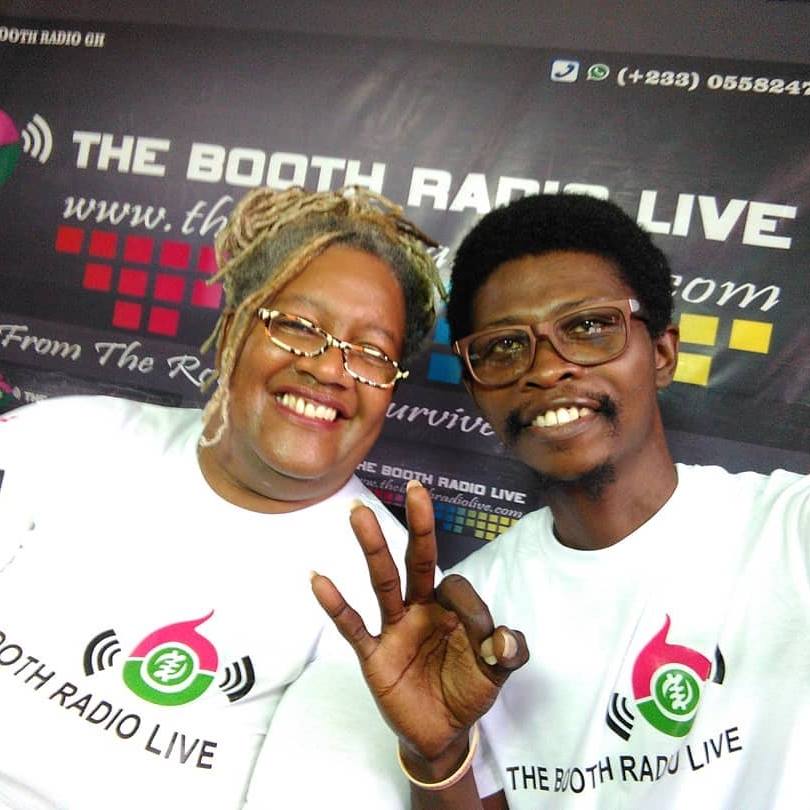
Hosted by TrapGAD & Fela TuffSoul
Proudly supported by Yardie Sessions, Tuff Buzz Entertainment & Team 4K Shooterz.


0 Comments