

Grammy-Nominated Engineer and Producer Delivers a Powerful Masterclass on Ownership, Publishing, Royalties, Sync Licensing, AI and the Future of Independent Music
By The Booth Radio Live | Midnight Reggae Vibes
There are interviews where an artist tells you what they have accomplished.
Then there are conversations that make you stop, take notes, rethink your strategy—and perhaps even question everything you thought you knew about the music business.
Octavia Landix's return to The Booth Radio Live for an Exclusive Masterclass Part 2 was the latter.
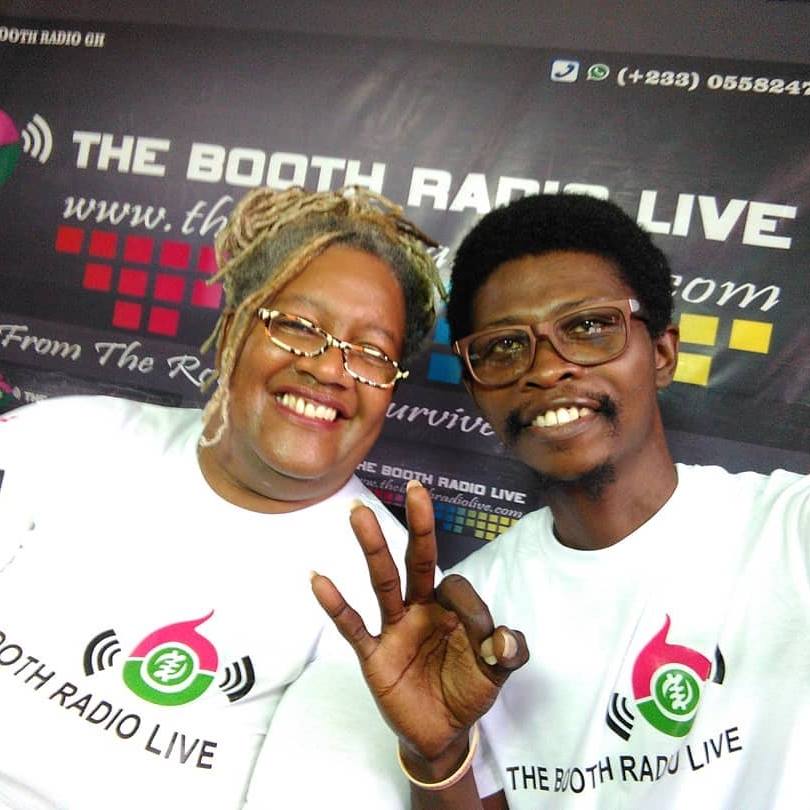
After an illuminating first conversation, Grammy-nominated recording engineer, producer, entrepreneur and founder of Luv 4 Musiq Productions returned to Midnight Reggae Vibes for a much deeper discussion with TrapGAD, co-hosted by Fela TuffSoul.
This time, the conversation moved beyond microphones, mixing and production.
It went straight into the machinery behind the music:
ownership.
publishing.
royalties.
masters.
contracts.
split sheets.
sync licensing.
AI.
entrepreneurship.
artist development.
And perhaps most importantly:
VALUE.
From the opening moments, Landix made it clear that she had returned not merely to answer questions, but to share knowledge and educate.
And educate she did.
"Talent Is Not Enough"
TrapGAD opened Part 2 with a challenge that immediately connected the conversation to artists across Ghana, Jamaica, Africa and the Caribbean:
What would Octavia do if a talented 20-year-old artist with limited money and no major fanbase came to her for a year of mentorship?
Her answer dismantled one of the most dangerous myths in the music industry:
Talent is not enough.
For Landix, talent is merely the entry point.
The artist must build an audience, sharpen their craft, develop discipline and eventually attract the right team.
She argued that emerging artists should not rush to release their first songs simply because they have recorded them. One example she shared involved an artist who had already invested hundreds of hours in the studio, yet Landix still felt the artist needed more development before releasing music publicly.
The lesson?
Don't confuse recording music with becoming a recording artist.
There is a difference between making songs and developing the ears, instincts, discipline and identity required to build a career.
The First 12 Months Should Be About Building—Not Showing Off
Landix's blueprint for a developing artist was remarkably practical.
Build the audience.
Artists need people who know them, follow them and care about what they are creating.
Build the craft.
Write.
Record.
Collaborate.
Study.
Practice.
Spend serious time in the studio.
Build the team.
But don't simply chase people and beg them to join.
Landix believes artists should become attractive to the right collaborators through the quality of their work and their consistency.
And there was another message hidden inside that advice:
Stop waiting for someone to rescue you.
Build something worth investing in.
The Promoter Trap
Then came one of the most controversial—and entertaining—moments of the masterclass.
TrapGAD asked what an emerging artist should not waste money on.
Landix's answer was immediate:
Don't waste your money paying promoters just to perform.
She described the practice of artists paying substantial amounts for performance opportunities while being expected to bring their own audience.
Her argument was simple:
If you're an unknown artist, there are other ways to gain stage experience.
Perform at open mics.
Create your own audience.
Record the performance.
Build content.
Invite your online community.
But don't automatically assume that paying a promoter equals career advancement.
The story became particularly striking when she recalled an artist who had reportedly spent around $1,500 for a performance opportunity with the promise that industry people might be present.
Her question was devastatingly practical:
Did the artist actually meet those people?
If the answer is no, then what exactly was purchased?
That is the kind of question every independent artist should ask before spending money.
One Viral Song Isn't a Career
Social media has created a new definition of success.
Views.
Likes.
Followers.
Viral moments.
But Landix challenged artists to think beyond the dopamine of going viral.
A viral song can create attention.
But attention must become opportunity.
She described the difference between a one-hit moment and a long-term career as the difference between having a song and building a catalog.
A catalog, she argued, can become an asset with measurable historical value when the music consistently generates income and has a proven track record.
Her message was especially relevant in an era where artists sometimes spend enormous energy chasing one viral moment while neglecting the infrastructure required to turn attention into sustainable income.
Virality is attention.
Longevity is an asset.
That's a distinction worth remembering.
Stop Looking at Your Music as Just Music
Perhaps one of the most important philosophical shifts in Part 2 was Landix's insistence that artists begin viewing their music as intellectual property.
A song is not merely something you upload.
It can become:
an asset;
a royalty generator;
a licensing opportunity;
a publishing asset;
a sync opportunity;
part of a catalog;
collateral for future business;
and potentially a source of generational wealth.
Landix repeatedly encouraged artists to think like investors and CEOs, not simply performers.
And that mindset changes everything.
The Master Recording: The Car You Need to Own
When the discussion turned to master recordings, Landix delivered one of the clearest analogies of the night.
She compared owning a master to owning a car versus leasing one.
If you don't own the vehicle, you can use it—but someone else controls the underlying asset.
If you own it, you control what happens to it.
The same principle, she explained, applies to masters.
Her argument was not that every artist must reject every deal.
Rather, artists need to understand what they are giving away, why they are giving it away, what they receive in return, and what that decision could mean years later.
That is the difference between signing a deal and understanding a deal.
Publishing: The Money Artists Don't See Coming
The conversation then entered territory that many independent musicians unfortunately discover too late.
Publishing.
Landix described discovering talented artists who had worked with major names but had never properly established their publishing structures.
Her reaction was essentially:
You're leaving money on the table.
She emphasized that publishing can create long-term value and potentially contribute to generational wealth.
But she also issued a warning:
Don't casually give away your publishing.
If someone wants to buy an artist's publishing interest, the artist must think beyond the immediate cheque.
What might the song be worth five or ten years from now?
What income could it generate?
What opportunities could develop around it?
What happens if the song becomes a classic?
Landix's investor mentality was simple:
Don't sell tomorrow's asset cheaply just because today's money looks attractive.
The Split Sheet Could Save Your Career
This may have been one of the most valuable sections of the entire masterclass.
TrapGAD brought a real-world situation into the conversation involving a rhythm, vocals, an absence of a formal split sheet and a later dispute over rights.
The situation became a perfect case study.
Landix explained that a split sheet documents how ownership of a composition is divided among the contributors.
But she went deeper.
She introduced an important way of thinking about splits:
Labor.
How much work did each person actually contribute?
Who wrote?
Who produced?
Who created the hook?
Who arranged?
Who contributed the idea that transformed the record?
A person who says one word in a session shouldn't automatically expect a huge percentage simply because they were present.
At the same time, a seemingly small contribution can become extremely important if it is the element that makes the song work.
That's why documentation matters.
Because memories fade.
People move.
Teams change.
Songs become successful.
And suddenly everybody remembers the session differently.
Landix stressed the importance of documenting contributions and registering songs properly so that everyone involved can be accounted for.
"Know Your Value"
One of the strongest themes of the entire conversation wasn't actually about copyright.
It was about self-worth in business.
Landix openly discussed how experience taught her to become more selective about the people and projects she works with.
She explained that she now requires potential clients to go through a consultation process before entering certain professional relationships.
Why?
Because boundaries protect creativity.
She also challenged the mentality of constantly saying:
"I'm doing it for free."
Instead, she encouraged creators to think in terms of:
"I'm investing my time."
That single change in language changes the business mindset.
If you're investing, you should understand the expected return.
That return doesn't always have to be cash.
It could be:
exposure;
referrals;
access;
relationships;
future work;
strategic positioning;
or another clearly defined benefit.
But there should be a reason.
Landix repeatedly returned to reciprocity—the idea that healthy professional relationships should involve people pouring back into one another rather than one person endlessly taking.
And her warning was blunt:
People will treat you according to the value they believe you have.
Think Like an Investor
That philosophy became one of the masterclass's defining ideas.
When somebody approaches an artist, producer or engineer with a project, the question shouldn't automatically be:
"How much are you paying me?"
The better questions can be:
What is the plan?
What is the desired outcome?
What am I investing?
What is the potential return?
What exactly am I agreeing to?
Landix explained that even when someone cannot afford her standard rate, she can still recognize value in referrals, opportunities and genuine reciprocity.
But she draws a line between an investment and simply being exploited.
That distinction could save emerging creatives years of frustration.
Before You Upload That Song... STOP
The masterclass then turned into something resembling a checklist for independent artists.
Landix argued that artists should have their business infrastructure organized before releasing music.
Among the issues she highlighted were:
split information;
contributor credits;
proper registration;
master and composition information;
organized files;
instrumental versions;
acapella versions;
radio edits;
performance/TV mixes;
final stems;
metadata;
identification codes;
artist profiles;
biographies;
social media information.
She emphasized that credits are not decoration.
Credits are your résumé.
They tell the industry who you worked with, what you contributed and where you have been.
And she practices what she preaches.
Landix described herself as highly organized with client files, explaining that years after a project is completed, an artist's management may suddenly need a performance version, stems or another deliverable.
Because she preserved the files, she could provide them.
That's professionalism.
Sync Licensing: Turn Your Song Into a Screen
Then the conversation moved into one of the most intriguing opportunities for modern independent artists:
Sync licensing.
Landix explained sync in simple terms: music is licensed for use alongside visual media such as film, television, commercials and advertising. The rights holder receives a licensing fee, while other applicable royalty streams can also continue depending on the deal and rights involved.
But then she revealed something many artists don't realize:
Sync music isn't necessarily structured like ordinary radio music.
She explained that sync-oriented compositions often benefit from movement and arrangement changes rather than sitting on the same repetitive loop throughout the song.
She also discussed the preference in sync environments for distinctive musical elements and live instrumentation, while warning about the complications that can arise from widely circulated loops and samples.
And there's another crucial point:
Paperwork matters enormously.
A music supervisor cannot afford to place music whose ownership is unclear.
If your rights aren't clean, your opportunity can disappear before the music is even seriously considered.
For African and Caribbean artists hoping to enter international sync markets, Landix suggested building relationships with people already operating in the sync ecosystem and making sure their professional information and rights documentation are in order.
AI: The Monster or the Instrument?
Then came the conversation everyone wanted to hear.
Artificial intelligence.
Part 1 established Landix's position that AI isn't disappearing.
Part 2 went further.
TrapGAD posed a difficult question:
If an artist writes the lyrics, AI creates part of the instrumental, and a human producer and engineer finish the record...
Who owns it?
Landix's answer was deliberately cautious.
She acknowledged that the legal landscape surrounding AI-generated music is still evolving and that platform-specific terms can change.
But her larger philosophical position was much clearer.
AI is a tool.
The real danger isn't necessarily the existence of the technology.
The danger is using technology as an excuse not to learn the craft.
Landix explained that she had already encountered AI-assisted creators who spend many hours developing a single song.
That impressed her.
Because the technology wasn't replacing their effort.
It was helping them execute their vision.
The Human Still Has to Bring the Art
Landix made perhaps her most compelling AI argument when discussing songwriting.
She pointed to the loss of traditional song structures in some contemporary music:
bridges;
pre-choruses;
musical transitions;
harmonic changes;
dynamic arrangements;
storytelling.
She believes AI can potentially help bring some of those elements back—especially for writers who hear sophisticated arrangements in their heads but lack the vocal or instrumental skills to demonstrate them.
But there was a condition.
The human must still have something to say.
For Landix, technology should not kill artistry.
It should expand the artist's toolbox.
"I Want to Keep the Art Form Alive"
This may be the philosophical heart of Part 2.
Landix explained that she isn't intimidated by AI because she possesses the musical knowledge and experience to understand how great records are constructed.
Instead, she worries about the erosion of musical craftsmanship itself.
Her response?
Teach it.
Share it.
Pass it down.
Keep the knowledge alive.
She spoke passionately about wanting to preserve the art of songwriting, production and musical arrangement rather than allowing important techniques to disappear simply because technology makes creation easier.
That transformed the AI discussion from:
Humans vs. machines
into something much more interesting:
How can technology help humans make better art?
Africa, the Caribbean and the Ownership Conversation
For The Booth Radio Live, this part of the discussion was particularly important.
The conversation repeatedly returned to the challenges facing artists outside the major traditional music-industry centers.
The broader discussion emphasized the need for education, infrastructure, documentation and preservation of musical history, particularly when artists and cultural pioneers are not properly credited or their intellectual property is not adequately organized.
That message resonates deeply across Ghana and the Caribbean.
Africa and the Caribbean do not suffer from a shortage of talent.
They suffer, in many cases, from gaps in systems, education, documentation, ownership and monetization.
And that is precisely why conversations like this matter.
Octavia's Record Room: From Masterclass to Movement
The interview eventually revealed another exciting chapter in Landix's career.
She has begun building Octavia's Record Room, a music-review platform designed to provide artists with constructive feedback from an experienced professional ear.
Rather than simply telling artists that their music is "good" or "bad," Landix described her approach as developmental.
Feedback should build artists—not destroy them.
She explained that the platform had already generated significant engagement during its early sessions, including more than 100,000 likes on multiple nights.
The concept is particularly interesting because Landix recognized a problem in the growing world of online music-review spaces:
Who is actually qualified to judge the music?
Her goal is not to become another personality shouting opinions at artists.
It's to create a space where creators can learn.
She emphasized that artists should not seek validation from one person's opinion. Instead, they should use constructive criticism as information for development.
That philosophy perfectly mirrors everything else she discussed throughout the masterclass.
From Recording Engineer to Educator
And perhaps that is what makes Octavia Landix's story increasingly fascinating.
She is no longer simply working behind the console.
She's becoming an educator.
A mentor.
A business strategist.
An advocate for ownership.
A bridge between traditional music craftsmanship and emerging technology.
And now, through her Record Room initiative, she's creating a new avenue for artists to receive informed feedback.
Her career demonstrates something important:
Your experience becomes more valuable when you learn how to transfer it to the next generation.
The Booth Radio Live Didn't Just Conduct an Interview
It would be easy to describe the broadcast as another celebrity interview.
That would be missing the point.
This was a masterclass.
TrapGAD's questioning pushed the discussion into practical territory, while Fela TuffSoul's participation helped maintain the energy and conversational chemistry that made the session feel less like a lecture and more like a creative roundtable.
And the result was bigger than one artist.
It became a conversation about the future of independent music.
A conversation about what happens when creators stop asking:
"How can I become famous?"
and start asking:
"What can I own?"
"What can I build?"
What can I preserve?
What can I pass down?"
The Real Takeaway: Don't Just Make Music. Build an Asset.
If there is one lesson that should survive long after the broadcast ended, it is this:
Music is more than sound.
It is intellectual property.
It is culture.
It is business.
It is history.
It is leverage.
It can become an asset.
But only if the creator understands how to protect, organize, monetize and develop it.
Octavia Landix didn't return to Midnight Reggae Vibes to sell a fantasy.
She returned to explain the machinery.
She challenged artists to work harder.
To study.
To understand their credits.
To protect their publishing.
To document their collaborations.
To understand their masters.
To stop giving away their value.
To think like investors.
To use AI intelligently.
To build teams.
To develop audiences.
And above everything else:
To take themselves seriously.
Because the music industry is changing.
The technology is changing.
The platforms are changing.
The business models are changing.
But one thing hasn't changed:
Those who understand their value are far harder to exploit.
A New Generation Needs This Conversation
For artists in Ghana.
For producers in Jamaica.
For songwriters in Nigeria.
For engineers in the Caribbean.
For independent creators in America.
For musicians anywhere trying to turn passion into a sustainable career...
The message from Octavia Landix is remarkably universal:
Learn the craft.
Learn the business.
Protect the work.
Know your value.
Build something that lasts.
And perhaps most importantly:
Don't chase the moment when you can build the legacy.
Interview Credits
Program: Midnight Reggae Vibes
Platform: The Booth Radio Live
Host: TrapGAD
Co-Host: Fela TuffSoul
Guest: Octavia Landix
Special Feature: Exclusive Masterclass — Part 2
Proudly Sponsored By
Yardie Session • Team 4K Shooterz • Tuff Buzz Entertainment • Victory Herbal Hair Booster


0 Comments