

The Midnight Reggae Vibes Show — Part 2
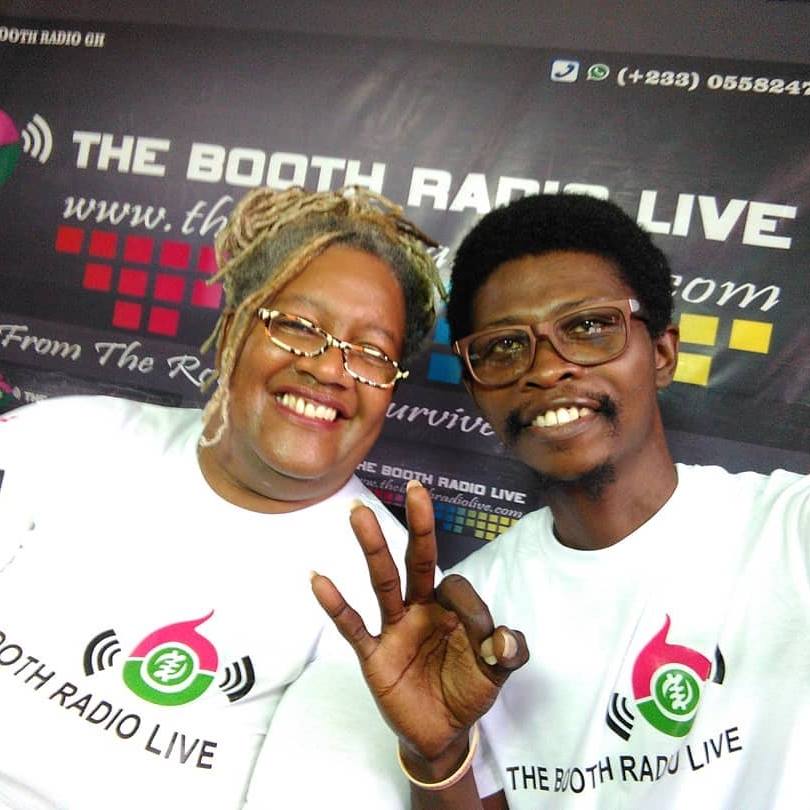
The Booth Radio Live
Hosted by: TrapGAD
Co-Hosted by: Fela TuffSoul — C.E.O., Tuff Buzz Entertainment
Proudly Sponsored By:
Tuff Buzz Entertainment • Yardie Session • Team 4K Shooterz • Victory Herbal Hair Booster
There are interviews where an artist tells you about their career.
Then there are interviews where history itself seems to sit down at the microphone.
When Anthony “Pure Silk” Brightly, co-founder, keyboardist, producer and driving force behind the legendary Black Slate, returned to The Midnight Reggae Vibes Show for Part 2, the conversation immediately became bigger than music.
It became a journey through British Caribbean history, sound-system culture, racism, entrepreneurship, spirituality, African identity, reggae's global power, family, ownership, filmmaking and the responsibility of one generation to prepare the next.
And perhaps most remarkably, Anthony wasn't speaking like someone looking backward.
He was speaking like someone preparing for what comes next.
A SECOND CONVERSATION — AND A DEEPER JOURNEY
Following the historic first interview, TrapGAD welcomed Anthony Brightly back to The Booth Radio Live on August 15, 2026, with Fela TuffSoul joining as co-host.
From the opening minutes, Anthony established the philosophy that would dominate the entire conversation:
Knowledge must be passed down.
He explained that elders have already travelled roads that younger generations are now approaching. Instead of forcing young people to repeat the same mistakes, the responsibility is to give them the "baggage" of experience—the lessons, warnings and wisdom accumulated over a lifetime.
That became the heartbeat of Part 2.
Anthony wasn't merely answering questions.
He was handing down archives.
LISTEN TO: Freedom Time (Black Star Liner) (2013 Remaster)
SIR GEORGE: THE SOUND SYSTEM THAT BECAME A UNIVERSITY
Before Black Slate became internationally recognized, there was Sir George Sound—the family sound-system legacy established by Anthony's father, George Brightly.
Anthony explained that Sir George was significant partly because he represented a rare second-generation transition: the son of the original sound-system generation successfully taking over and operating the family institution.
But the deeper story is cultural.
In Britain, Caribbean sound systems weren't simply places where records were played.
They became universities.
They taught young people about music, business, technology, competition, presentation, identity and community.
Anthony described how exclusive records and dub plates created an entire underground economy. A sound could have a record that nobody else possessed, giving people a reason to travel across London just to hear it.
That competition helped create an ecosystem where Black Caribbean businesses could circulate money within their own communities.
The sound system wasn't just entertainment.
It was infrastructure.
And that insight is critical to understanding Anthony Brightly's career.
He wasn't simply making records.
He was helping build an industry.
LISTEN TO: Sir George Sound One Sound (A.I)
WHEN MUSIC BECAME CULTURE
Anthony offered an extraordinary reflection on growing up Black in Britain during the 1960s and 1970s.
Football, he explained, wasn't always the welcoming space it is today. Racism was openly experienced, and Black communities were frequently pushed toward creating their own spaces.
Sound systems became one of those spaces.
Anthony described how thousands of people could follow a sound system from venue to venue every weekend, much like modern football supporters follow their clubs. Sir George could attract thousands of followers across a weekend.
And something profound happened.
The community discovered that its music was its culture.
Out of necessity came entrepreneurship: grocery shops, barbers, restaurants, clubs, tailors, dressmakers and music businesses.
The community created its own ecosystem.
Anthony's reflections make it clear that what later became celebrated as British reggae culture wasn't created in comfortable circumstances.
It was built under pressure.
STICKSMAN: WHEN A SONG BECAME A MIRROR
Few records in British reggae history carry the social weight of "Sticksman."
But hearing Anthony explain its creation in Part 2 gave the song an entirely different dimension.
He recalled witnessing an incident that deeply disturbed him. He went into the studio and wrote the lyrics almost immediately, line by line, directing the vocalist through the words as they came to him.
The record wasn't created simply to make people dance.
It confronted behaviour within the community.
Anthony even described the uncomfortable irony of playing a record criticizing people who had paid to attend his dance.
He wasn't sure how the crowd would react.
But eventually, the message landed.
And the song exploded.
According to Anthony's account, records from the Black Slate era went to No. 1 in territories including Belgium, Luxembourg and Holland—success that the group could never have predicted when they were simply making music they loved.
The biography supplied for the programme similarly records "Sticksman" as a seminal British Roots Reggae anthem and identifies Black Slate as early pioneers of UK Roots Reggae.
But Anthony's interpretation of the record in 2026 is perhaps even more powerful.
"Sticksman" still speaks.
Its themes of morality, theft, inequality and personal responsibility haven't disappeared.
The song became a historical document because Anthony wrote about what he saw.
LISTEN TO: Black Slate - Sticks Man
THE SPIRIT BEHIND THE SOUND
Ask Anthony what made Black Slate different, and you might expect an answer about musicianship, songwriting or production.
His answer was much simpler:
The Spirit of the Almighty God.
Throughout Part 2, Anthony repeatedly rejected the idea that he alone should receive credit for the band's extraordinary journey.
He spoke of being obedient to the spirit and allowing the music to come through him.
This spiritual perspective also reframes songs such as "Amigo."
Anthony explained that he now understands the record as deeply spiritual, even though it wasn't initially presented to audiences as conventional gospel music. He sees the spiritual message as having existed within his music long before he consciously understood his relationship with God in the same way.
That revelation eventually became one of the defining chapters of the Pure Silk story.
PURE SILK: THE BRAND THAT SOLVED A MUSIC INDUSTRY PROBLEM
Anthony's Pure Silk concept was remarkably forward-thinking.
As a producer, he noticed a recurring problem.
He would develop an artist, establish their sound, build an audience—and then the artist would move elsewhere.
Anthony would have to start again.
So he looked at the model of producers and musical entities that could maintain a recognizable identity while featuring different performers.
That became Pure Silk.
Instead of the audience learning a completely new identity every time, the consistent brand was Pure Silk, while different artists became part of the musical family.
Anthony described it as a "container" that allowed the music to continue without returning to square one every time an artist changed.
His official biography records Pure Silk's 1990 debut single, "Do You Ever Think About Me," featuring One Destiny, and its subsequent work with artists including Ken Boothe, Carroll Thompson, Trevor Hartley, Wendy Walker, Winsome and Winston Reedy.
This wasn't merely artistic creativity.
It was music-business strategy.
WATCH: Black Slate - Boom Boom Rasta Festival (Official Music Video)
THE PRODUCER'S REAL JOB
Anthony also delivered a valuable lesson for today's independent artists.
He doesn't believe today's young musicians simply make "mistakes."
He believes the industry has failed to give them enough places to learn.
An accountant has university.
A doctor has medical school.
An athlete has training structures.
But where does a young musician go to learn the fundamentals of being a professional artist?
Anthony's answer is that experienced people must share what they know.
He emphasized understanding your craft, learning the fundamentals and—perhaps most importantly—sharing knowledge rather than hoarding it.
That philosophy is central to Anthony's current work.
FROM BLACK SLATE TO THREE GENERATIONS
One of the most beautiful parts of the interview came when Anthony spoke about family.
Black Slate began with young musicians who came together when Anthony was only around eleven.
Today, the band has evolved into a multigenerational institution.
Anthony's son Gaven/Gavin now carries lead-vocal responsibilities, while younger musicians have joined the band. Anthony described the current formation as involving three generations working together.
That isn't simply succession.
That's cultural preservation in real time.
The official Black Slate catalogue likewise describes the contemporary 50+ collection as a three-generation continuation, with Anthony's son bringing new energy and vocals alongside younger musicians. (Black Slate)
The message is clear:
A legacy isn't preserved by putting it in a museum.
A legacy survives when the next generation is allowed to carry it.
THE STAGE WITH PETER TOSH
Anthony has shared stages with some of reggae's greatest names, but his memories of touring with Peter Tosh reveal something important about reggae culture.
Black Slate toured with Tosh for roughly a month, alongside an extraordinary musical environment that included musicians of the highest calibre.
Anthony wasn't focused on celebrity.
He focused on opportunity and mutual respect.
He described reggae's greatest strength as its ability to bring people together through peace, love, harmony and shared musical experience.
That philosophy extends beyond nostalgia.
For Anthony, reggae remains a living force.
A song can transport someone decades into the past.
A lyric can change someone's outlook.
A rhythm can unite people who don't even speak the same language.
That is reggae's superpower.
AFRICA WAS NEVER FAR AWAY
Perhaps the most powerful dimension of Part 2 was Anthony's discussion of Africa.
Black Slate's music has long carried references to African liberation and identity. Anthony recalled writing about Africa decades ago while sensing a connection that he couldn't fully explain at the time.
Now, decades later, that connection is becoming more tangible.
Anthony spoke about Ghana, African history and the barriers that separated African and Caribbean communities for generations.
And then came perhaps one of the most exciting moments of the entire interview:
Anthony wants Black Slate in Ghana.
During the conversation, he and TrapGAD discussed the possibility of bringing the band to Ghana and developing creative projects across Ghana, the Caribbean and the United Kingdom.
Anthony even expressed interest in filming around Ghanaian historical locations and working with local film professionals.
For The Booth Radio Live, that isn't merely another booking opportunity.
It could be the beginning of a cultural bridge.
THE MOVIE IS COMING
And just when listeners thought the conversation couldn't get bigger...
Anthony revealed that the next chapter isn't simply another album.
It's film.
He spoke about creating movies rooted in the experiences and history of Black people, developing film infrastructure and creating opportunities for young filmmakers.
His vision isn't to build a studio simply for himself.
It's to create somewhere young people can go.
Somewhere they can learn.
Somewhere they can make films.
Somewhere their stories can exist.
He spoke passionately about creating a creative industry where talented people can come forward without needing to beg permission from established systems.
The conversation between Anthony and TrapGAD then evolved into the possibility of a Ghana–UK–Caribbean feature-film collaboration.
Anthony described the current discussions as part of the script for his eventual journey to Ghana.
And the most exciting detail?
The next stage of the conversation is already being planned.
"WE HAVE TO MAKE OUR OWN INDUSTRY"
That may be one of the most important lessons Anthony delivered during Part 2.
Don't wait for someone else to create the platform.
Build the platform.
Don't wait for someone else to tell your story.
Tell the story.
Don't wait for somebody else to preserve your culture.
Preserve it yourself.
That philosophy is visible in Anthony's current work across music, film, production and cultural development. His official website describes his mission as preserving legacy while building the future through music, film, education, ownership and Caribbean creative development. (Anthony Brightly)
It is also reflected in DeJam Festival, which Anthony founded in Antigua and which continues to connect music, tourism and Caribbean culture. (DeJam Festival Reloaded)
THE POWER OF OWNERSHIP
For independent artists, perhaps the most important lesson hidden inside this interview is ownership.
Anthony has lived through multiple eras of the music business:
Sound systems → vinyl → record labels → international touring → studios → production → digital media → film.
He has seen the industry change.
But one principle remains:
Build something you own.
That could mean a sound system.
A label.
A production company.
A studio.
A catalogue.
A film company.
A media platform.
Or a community.
The technology may change.
Ownership remains powerful.
THE MIDNIGHT REGGAE VIBES SHOW BECAME PART OF THE STORY
There was another remarkable element to this interview.
Anthony wasn't simply treated as a guest.
The conversation gradually became a relationship between generations.
TrapGAD approached the conversation with genuine admiration, while Fela TuffSoul helped create the environment for the discussion to move naturally between music, history, spirituality and culture.
At several points, the interview stopped feeling like a traditional Q&A.
It became father and son energy.
Teacher and student.
Elder and younger generation.
Africa and the Caribbean.
Past and future.
And that is exactly what The Midnight Reggae Vibes Show should represent.
FROM THE ROOTS WE SURVIVE
Anthony Brightly's story ultimately connects beautifully with the philosophy of The Booth Radio Live:
From The Roots We Survive.
Because roots aren't simply old records.
Roots are knowledge.
Roots are memory.
Roots are family.
Roots are culture.
Roots are the stories our elders carry.
And when those stories are passed down, the roots don't die.
They grow.
Black Slate's official catalogue continues to document the band's ongoing musical journey, including recent 50+ releases such as "Amigo 50+" and "Key to the World 50+", demonstrating that this is not merely a story about the past—the music continues to evolve. (Black Slate)
WATCH: Amigo 50+ - Black Slate - (Official Music Video)
THE LEGACY IS NOT FINISHED
Anthony "Pure Silk" Brightly has already lived several lifetimes in music.
Child keyboard player.
Sound-system selector.
Black Slate pioneer.
International touring musician.
Producer.
Entrepreneur.
Pure Silk creator.
Lovers Rock architect.
Lovers Gospel innovator.
Studio owner.
Mentor.
Festival creator.
Filmmaker.
Cultural historian.
And now...
Bridge builder.
His message to the next generation is not to imitate him.
It is to listen, learn, create, share and build.
And perhaps the most beautiful conclusion to the entire conversation came when Anthony was asked what he wanted reggae lovers around the world to remember.
His answer was essentially a call to listen to the music with pride, recognize what moves you, and discover the part of it that speaks to you.
That's the Anthony Brightly philosophy.
Not simply:
"Remember me."
But:
"Listen to the music. Find what you love. Understand why it moves you. Then carry it forward."
BLACK SLATE IN GHANA?
That possibility now hangs in the air.
Anthony has expressed his desire to return to Ghana, perform for the people and explore filmmaking and cultural collaboration here. The interview even moved toward discussions of a future Ghana-based production involving real people, local talent and stories rooted in the communities themselves.
If that vision becomes reality, it would be more than a concert.
It would be a reunion.
A homecoming.
A cultural exchange.
A meeting between the sound-system generation of Britain and the African homeland that has always lived inside the music.
Black Slate in Ghana.
Now that's a chapter worth watching.
FINAL WORD
Five decades after a young Anthony Brightly first stepped into the world of music, he still sounds excited when he hears his own records.
That may be the greatest secret of his longevity.
He never stopped loving the music.
He never stopped learning.
He never stopped creating.
And most importantly—
he never stopped sharing.
From Sir George Sound to Black Slate.
From "Sticksman" to "Amigo."
From Pure Silk to Lovers Gospel.
From London to Antigua.
From the Caribbean to Africa.
From records to film.
From one generation to another.
Anthony "Pure Silk" Brightly isn't simply a survivor of reggae history.
He is one of the people who helped write it.
And if the vision discussed during Part 2 becomes reality, he may be preparing to write one of its most exciting new chapters—with Ghana right in the middle of it.
WATCH FULL INTERVIEW BELOW:
THE MIDNIGHT REGGAE VIBES SHOW
Programme: The Midnight Reggae Vibes Show
Platform: The Booth Radio Live
Host: TrapGAD
Co-Host: Fela TuffSoul — C.E.O., Tuff Buzz Entertainment
PROUDLY SPONSORED BY
Tuff Buzz Entertainment
Yardie Session
Team 4K Shooterz
Victory Herbal Hair Booster
THE BOOTH RADIO LIVE
FROM THE ROOTS WE SURVIVE.
One Love. One Culture. One Sound. One Legacy.


0 Comments