

The Unsung Hero Who Gave Birth to Hip-Hop
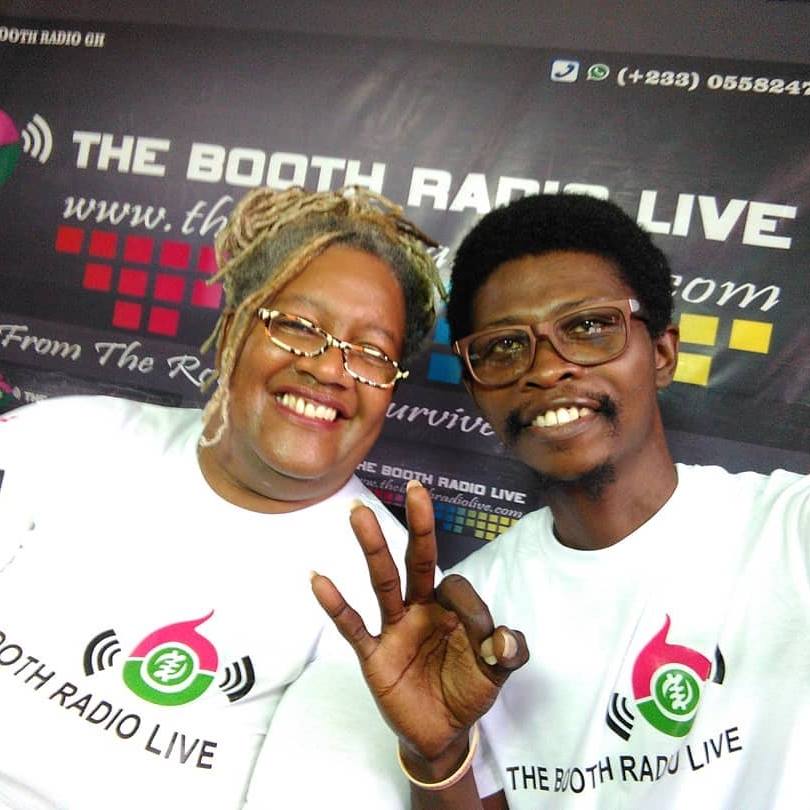
Presented by Kirv TopBoss, CEO of Kirv TopBoss Promotions, on the Unsung Heroes Segment of The Booth Radio Live's Midnight Reggae Show hosted by TrapGAD.
When people speak about the most influential figures in modern music, names like Bob Marley, Michael Jackson, Tupac Shakur, Jay-Z, and Kendrick Lamar often dominate the conversation. Yet behind the success of every rapper, DJ, breakdancer, and hip-hop artist stands a man whose name is not always celebrated as loudly as it should be.
That man is DJ Kool Herc.
Long before hip-hop became a multi-billion-dollar global industry, before rap music topped charts worldwide, and before breakdancing entered the Olympics, there was a young Jamaican immigrant with a vision, a pair of turntables, and an idea that would forever change the culture of music.
From Kingston, Jamaica to the Bronx
Born Clive Campbell on April 16, 1955, in Kingston, Jamaica, Kool Herc grew up surrounded by the vibrant sounds of Jamaican sound system culture. Massive speaker stacks, street dances, and DJs who energized crowds through rhythmic talking and crowd interaction were a regular part of life.
This tradition, known as "toasting," would later become one of the foundational influences of rap music.
In 1967, at the age of twelve, Campbell moved with his family to the Bronx, New York. The Bronx of the late 1960s was a community facing economic hardship, rising crime, gang activity, and urban decay. Yet amid these struggles, a powerful youth culture was emerging.
Because of his impressive size and strength, Campbell earned the nickname "Hercules." Eventually, friends shortened it to "Herc," and the world would come to know him as DJ Kool Herc.
DJ Kool Herc and the birth of hip-hop | Christie's
Creating Something New From Nothing
Inspired by the sound system culture of Jamaica and the raw energy of American funk music, Herc began hosting neighborhood parties. He studied the music closely, paying particular attention to how dancers reacted to different parts of a song.
One observation would change music history forever.
Herc noticed that crowds became most excited during the instrumental "break" sections of funk records—the moments when the vocals stopped and the drums took center stage. These brief musical passages electrified dancers, but they never lasted long enough.
Most DJs simply played the record and moved on.
Kool Herc did something revolutionary.
Using two copies of the same record on separate turntables, he developed a technique that allowed him to extend these break sections indefinitely. By switching between the records at exactly the right moment, he created a continuous loop of rhythm and percussion.
This innovation became known as the "Merry-Go-Round" technique.
What seemed like a simple experiment became the foundation of modern DJing, sampling culture, remixing, and hip-hop itself.
August 11, 1973: The Night That Changed the World
Every great movement has a defining moment.
For hip-hop, that moment came on August 11, 1973.
At a back-to-school party organized by Herc's sister Cindy in the recreation room of 1520 Sedgwick Avenue in the Bronx, DJ Kool Herc publicly showcased his extended breakbeat technique.
The response was immediate.
Dancers flooded the floor. The energy was unlike anything the neighborhood had experienced before. Word spread rapidly across the Bronx, and what began as a local party soon evolved into a cultural movement.
Today, many historians recognize that historic gathering as the birthplace of hip-hop culture.
A modest community party became the spark that ignited a global phenomenon.
The Birth of B-Boys, MCs, and Hip-Hop Culture
Kool Herc's parties were much more than music events.
They became the blueprint for an entirely new cultural ecosystem.
The dancers who dominated the floor during the breakbeats became known as "break-boys" and "break-girls," eventually shortened to B-Boys and B-Girls. These dancers would go on to create what the world now knows as breakdancing.
At the same time, crowd motivators and announcers evolved into MCs, laying the groundwork for rap performance.
Graffiti artists found a gathering place to showcase their creativity, while DJs became cultural leaders controlling the soundtrack of the streets.
Without realizing it, Herc had created the four foundational pillars of hip-hop:
DJing
MCing
Breakdancing
Graffiti Art
A culture was born.
Influencing Future Legends
While DJ Kool Herc may not have achieved the commercial success enjoyed by some later hip-hop pioneers, his influence can be found throughout the genre's entire history.
Two of the most important architects of hip-hop—Afrika Bambaataa and Grandmaster Flash—built upon the foundation Herc established.
They expanded the art form through scratching, advanced mixing techniques, and more sophisticated MC performances, but the blueprint belonged to Kool Herc.
Every generation of hip-hop artists, from the pioneers of the 1970s to today's global superstars, owes a creative debt to the Jamaican immigrant who first extended a breakbeat in the Bronx.
A Community Builder Before a Celebrity
Perhaps one of Herc's greatest achievements was not musical but social.
At a time when gang violence threatened many young people in the Bronx, his parties offered an alternative.
The events created safe spaces where rival groups could gather, dance, compete, and express themselves through creativity rather than conflict.
Music became a bridge.
Dance became an outlet.
Culture became a solution.
Through his influence, countless young people found purpose, identity, and community.
Recognition Long Overdue
For decades, many outside the hip-hop community were unaware of DJ Kool Herc's contributions. Yet as hip-hop continued to grow into one of the world's most powerful cultural forces, historians and institutions increasingly recognized the true origin of the movement.
The building at 1520 Sedgwick Avenue became internationally recognized as the birthplace of hip-hop.
Museums, universities, and cultural organizations honored Herc's achievements.
Then, on November 3, 2023, fifty years after that historic Bronx party, DJ Kool Herc received one of music's highest honors when he was inducted into the Rock & Roll Hall of Fame through the Musical Influence Award category.
The recognition was more than an award.
It was a declaration to the world that the Father of Hip-Hop had finally received the acknowledgment he deserved.
The Legacy Lives On
Today, DJ Kool Herc remains a living legend.
His innovations continue to influence music production, DJ culture, dance competitions, festivals, and artistic expression across the globe.
Every breakbeat sampled.
Every DJ transition.
Every rap performance.
Every B-Boy battle.
Every hip-hop anthem.
All carry a piece of the vision first imagined by a young Jamaican immigrant who believed music could bring people together.
His story reminds us that true greatness is not measured by fame alone. Sometimes the most important people are the ones working behind the scenes, planting seeds that future generations will harvest.
DJ Kool Herc did not simply create a new style of music.
He created a culture.
And in doing so, he changed the world forever.
WATCH FULL VIDEO BELOW:
Final Thoughts
As highlighted by Kirv TopBoss during the Unsung Heroes segment on The Booth Radio Live, the story of DJ Kool Herc is more than the story of hip-hop. It is the story of innovation, resilience, and cultural transformation.
From Kingston to the Bronx, from a community recreation room to global recognition, Herc proved that one person with one revolutionary idea can impact billions.
Hip-hop may have become a worldwide movement, but its heartbeat can still be traced back to a Jamaican pioneer standing behind two turntables, extending a breakbeat, and unknowingly making history.


0 Comments